You Can Put Video on Spotify Now. Here's What Nobody's Telling You About It.
Spotify opened direct video uploads to artists in June. The headlines missed the part that matters: for most artists, your distributor is still the way in — and half the videos people are about to make aren't even supported.
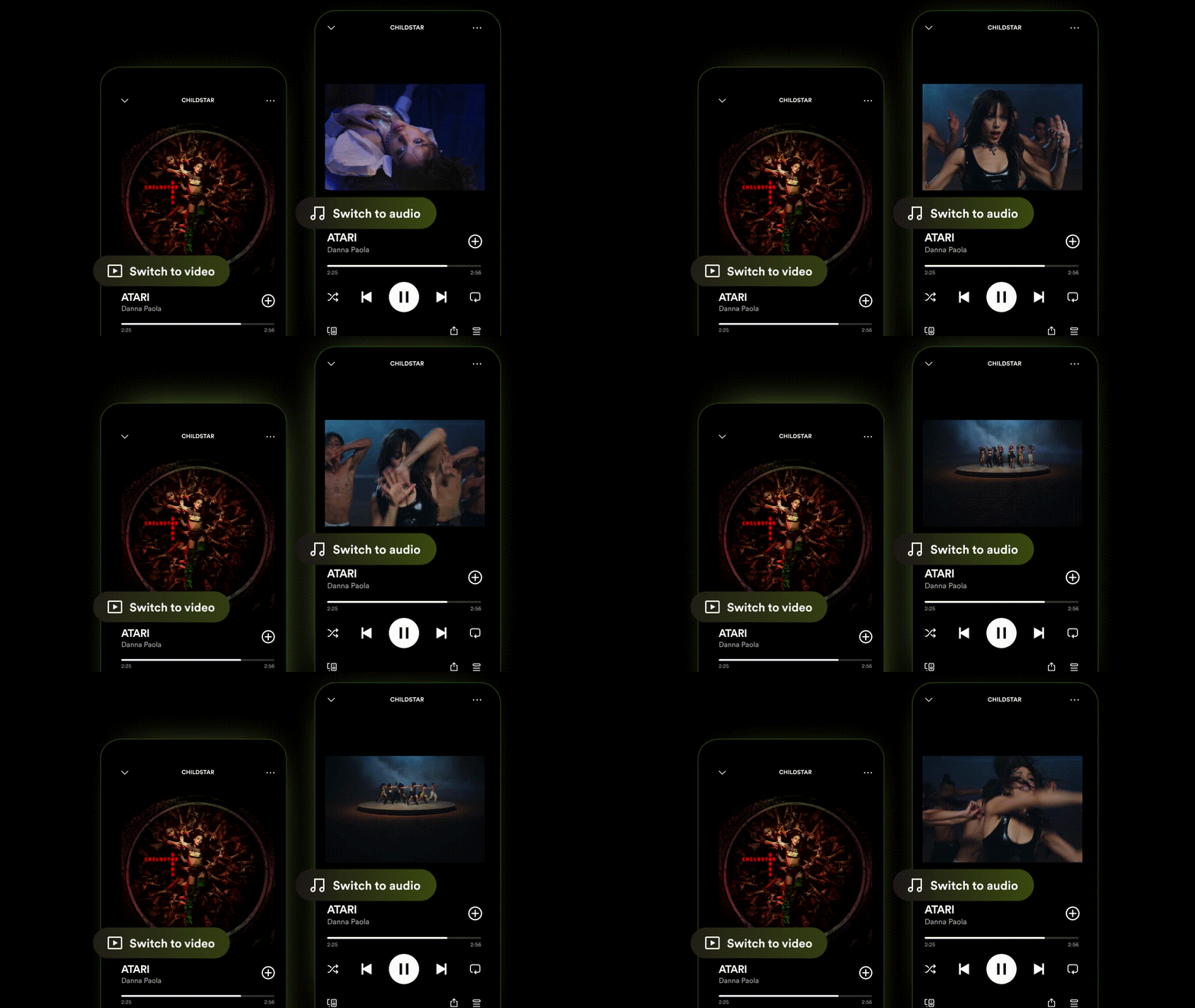
In June, Spotify started letting artists upload full-length video straight from Spotify for Artists — official music videos, live performances, studio sessions and covers. The videos earn royalties, and they can count toward charts.
That's the headline everyone ran. Here's the part that got buried, and it's the part that decides whether this is useful to you this month or not for another year.
It's a beta, and you're probably not in it
Direct upload is open to a limited group of artists. If the upload option isn't in your Spotify for Artists account, there's a waitlist, and that's the whole story for now.
More to the point, Spotify has been explicit that delivery through labels and distributors stays the primary route for both audio and video. Direct upload is an additional option for eligible artists, not a replacement for the pipeline. Music videos have been arriving on Spotify through distributors for over a year already.
So if you read a headline that said "artists can now upload video to Spotify" and went looking for a button, that's why you couldn't find one. The route that works today is the one you already use for audio.
Half the videos people make aren't supported
This is the expensive mistake waiting to happen. Not currently supported:
- Visualizers
- Lyric videos
- Multi-song concert recordings
- Videos with no music in them
Look at that list and think about what an independent artist typically makes when someone says "we need video." A lyric video and a looping visualizer are the two cheapest things to produce, and neither one qualifies.
What does qualify is the harder, better thing: an official video for a specific track, a live performance, a session take, a cover. Music first, one song, shot properly.
The specs, so nobody wastes a shoot
- Landscape 16:9. Not vertical. This is the opposite of what the last three years of short-form has trained everyone to shoot.
- 1920×1080 or better.
- Longer than 30 seconds — that's the threshold for earning royalties.
- Under 20 minutes, under 50 GB.
Spotify generates short-form previews from your upload automatically, so you don't need to cut a separate vertical version for the platform.
Your audience for video is smaller than your audience for audio
Video playback is a Premium feature. Free-tier listeners don't get it, in any market. So your potential video audience is a subset of the people already streaming you — a real ceiling, and worth knowing before you build a campaign around it.
That doesn't make it worthless. It makes it a retention and depth play rather than a discovery play. The people who watch are the people who already care.
Clips are over
New Clips uploads ended when this rolled out. Anything you've already posted stays live, and the Clips tab on artist profiles is being folded into a Video tab.
If short vertical Clips were part of anyone's Spotify routine, that routine is finished. The replacement is full-length landscape video, which is a different production job with a different budget.
What we'd actually do
Stop making lyric videos for Spotify. They don't qualify. If you were going to spend that budget anyway, spend it on a live take of the same song.
Shoot landscape, or shoot both. If you're already filming for YouTube, you have the asset. That's the cheapest way into this — one shoot, two homes.
Pick the one song worth it. This is per-track, tied to a specific recording. Videos aren't a catalogue play; they're a single play.
Get on the waitlist anyway. Direct upload will widen. Being in early costs nothing.
Ask your distributor whether they deliver video to Spotify. Not every one does. If yours doesn't, that's a real gap — and switching distributors mid-catalogue creates royalty and metadata problems you don't want, so find out before you need it rather than after.
The bigger picture
Spotify is going after YouTube. Video streams that are royalty-bearing and chart-eligible, inside the app where people already listen, is a direct move on the thing YouTube has owned for twenty years.
It's early and it's limited. But if the last two years taught the independent sector anything, it's that the platforms move faster than most artists' production schedules. The people who benefit will be the ones who already had the footage when the door opened.